
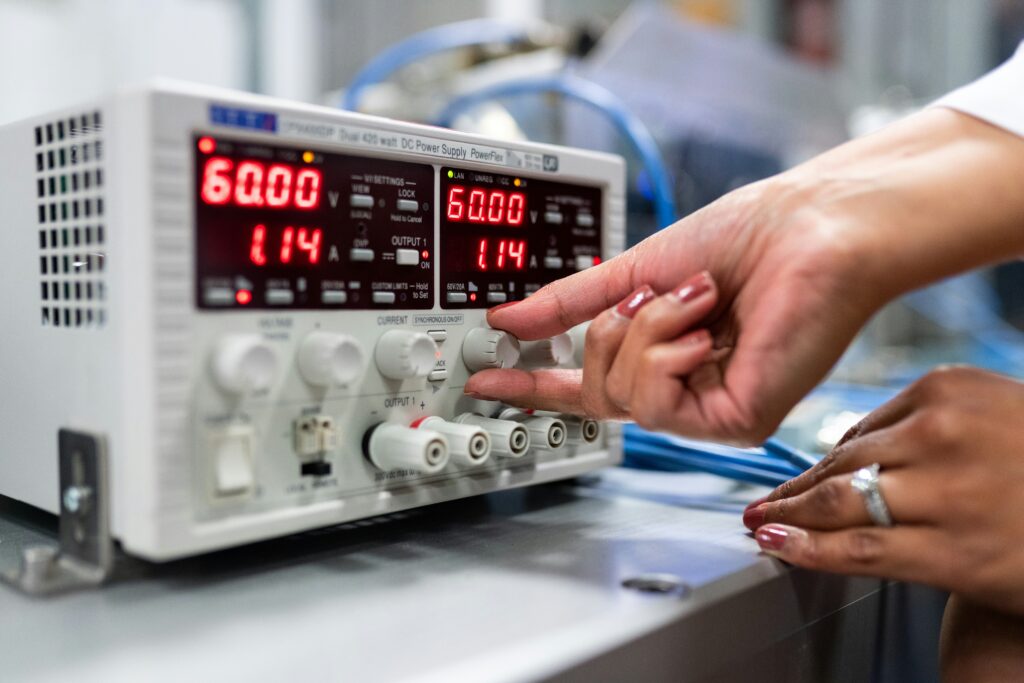
The Role of Analogue Engineering in Modern Electronics
In an age dominated by digital technology, analogue engineering remains a crucial field, providing the foundational principles and components that drive modern electronics. From audio equipment to instrumentation and communication systems, analogue engineering plays a pivotal role in ensuring the seamless operation of various devices. This article explores the significance of analogue engineering, its key applications, the benefits it offers, and the challenges it faces.
1. Overview of Analogue Engineering
Analogue engineering involves the design and development of circuits and systems that process continuous signals. Unlike digital systems, which operate using discrete values, analogue systems handle a continuous range of values, making them essential for applications that require high precision and fidelity.
2. Key Applications of Analogue Engineering
Analogue engineering supports a wide range of applications across different industries:
- Audio Engineering: Analogue circuits are critical in audio equipment, such as amplifiers, equalizers, and mixers, providing high-fidelity sound reproduction. Analogue technology is prized in audiophile circles for its warm and natural sound quality.
- Instrumentation and Measurement: Precision analogue circuits are used in measurement devices and instrumentation, including oscilloscopes, signal generators, and multimeters. These tools rely on analogue technology to accurately capture and display continuous signals.
- Communication Systems: Analogue engineering is fundamental in radio frequency (RF) communication systems, including radios, televisions, and mobile phones. Analogue circuits handle the modulation and demodulation of RF signals, enabling effective transmission and reception of information.
- Control Systems: Analogue components are used in control systems for industrial automation, robotics, and aerospace applications. These systems require precise control of continuous variables, such as temperature, pressure, and speed.
3. Benefits of Analogue Engineering
Analogue engineering offers several advantages in various applications:
- High Precision: Analogue systems can process signals with high precision and accuracy, making them ideal for applications requiring fine control and detailed measurements.
- Real-Time Processing: Analogue circuits process signals in real-time without the need for conversion to digital form, ensuring immediate response and continuous operation.
- Simplicity and Reliability: Analogue components, such as resistors, capacitors, and inductors, are often simpler and more reliable than their digital counterparts, making them suitable for robust and durable designs.
- Natural Signal Handling: Analogue systems handle natural signals, such as sound and light, in their continuous form, preserving the integrity and quality of the original signal.
4. Challenges and Considerations
Despite its advantages, analogue engineering faces several challenges:
- Noise and Interference: Analogue systems are susceptible to noise and interference, which can degrade signal quality and accuracy. Effective shielding and filtering are essential to mitigate these effects.
- Component Variability: Analogue components can exhibit variability due to manufacturing tolerances and environmental conditions, affecting the performance and consistency of analogue circuits.
- Complex Design: Designing analogue circuits requires a deep understanding of circuit theory and signal processing, making it a specialized field that demands expertise and experience.
- Integration with Digital Systems: Modern electronic systems often require the integration of analogue and digital components. Achieving seamless interfacing between these systems can be complex and challenging.
5. Future Trends and Innovations
The future of analogue engineering will be shaped by ongoing advancements in technology and emerging applications:
- Analog-Digital Hybrid Systems: The development of hybrid systems that combine analogue and digital components will continue to grow, leveraging the strengths of both technologies for enhanced performance and functionality.
- Advanced Materials and Components: Innovations in materials science and component design will lead to the development of advanced analogue components with improved performance, reliability, and efficiency.
- Miniaturisation: The trend towards miniaturisation will drive the development of compact and integrated analogue circuits, enabling their use in portable and wearable devices.
- Sustainability: Efforts to improve the energy efficiency and environmental impact of electronic systems will influence the design and implementation of analogue circuits, promoting sustainable engineering practices.
Conclusion
Analogue engineering remains a vital field in the realm of modern electronics, underpinning many essential applications and technologies. By processing continuous signals with high precision and fidelity, analogue systems play a key role in delivering the performance and reliability demanded by contemporary devices. As technology continues to evolve, analogue engineering will continue to innovate and adapt, ensuring its relevance and importance in the future of electronics.
